Blogs
Subscribe to learn about new product features, the latest in technology, solutions, and updates.
Recent blog posts
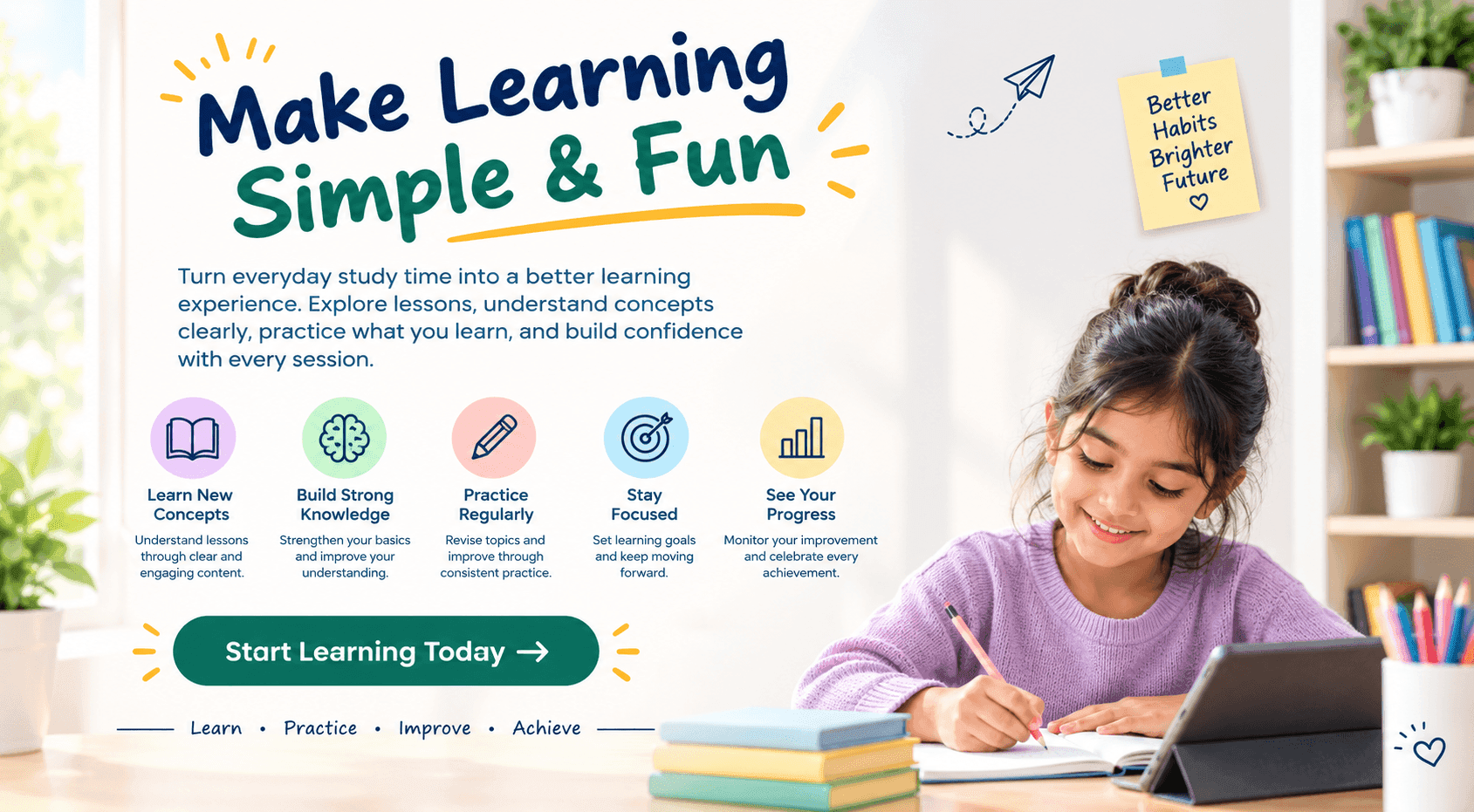
Make Learning Simple, Engaging & Effective
Learning becomes more meaningful when students can understand concepts clearly, practise regularly, and learn at their own pace. A well-designed learning platform can make everyday study more organized, interactive, and enjoyable. Instead of making learning feel like a routine task, digital learning tools can create an environment where students can explore new topics, strengthen their knowledge, and develop better study habits. A learning platform gives students access to educational content in a simple and convenient way. Lessons can be explored whenever and wherever students need them, allowing them to learn according to their own pace. Whether they are discovering a new concept, revising an important topic, or preparing for an upcoming examination, digital learning resources can support them throughout their learning journey. One of the most important parts of effective learning is understanding concepts clearly. Simply memorizing information may not always help students apply what they have learned. Engaging lessons, clear explanations, visual resources, and structured study materials can help students understand subjects more effectively and remember important ideas for longer.Regular practice also plays an important role in improving academic performance. Students can revisit topics, practise questions, test their understanding, and identify areas that need more attention. Consistent practice helps turn knowledge into confidence and encourages students to approach challenging subjects with a positive mindset. Another advantage of digital learning is the ability to stay focused and organized. Students can plan their study time, follow lessons systematically, and set achievable learning goals. Having a clear learning routine helps reduce confusion and makes it easier to maintain consistency.Progress is another important part of the learning experience. When students can see how much they have learned and how much they have improved, they can stay motivated to continue. Small achievements can encourage students to keep working towards bigger academic goals. A good learning environment should also encourage curiosity. Education is not only about completing lessons or preparing for examinations. It is about developing the habit of asking questions, exploring ideas, solving problems, and gaining knowledge that can be useful in everyday life. With the right digital learning support, students can make better use of their study time. They can learn new concepts, revise important topics, practise regularly, improve their skills, and gradually build confidence in their abilities. Key Learning Benefits Learn New Concepts – Explore lessons and discover new ideas through clear and engaging educational content. Build Strong Knowledge – Strengthen basic concepts and develop a deeper understanding of different subjects. Practice Regularly – Revise lessons, solve questions, and improve through consistent practice. Stay Focused – Follow a structured learning routine and work towards specific academic goals. Track Progress – Understand your improvement and stay motivated throughout your learning journey. Learn at Your Pace – Take time to understand difficult topics and revisit lessons whenever necessary. Conclusion Every student has the potential to learn, improve, and achieve meaningful goals. The right learning resources can make that journey easier, more engaging, and more organized. By combining clear lessons, regular practice, focused learning, and continuous improvement, students can develop stronger knowledge and greater confidence. Learning does not have to be complicated. With the right support and consistent effort, every study session can become an opportunity to discover something new and move one step closer to success.
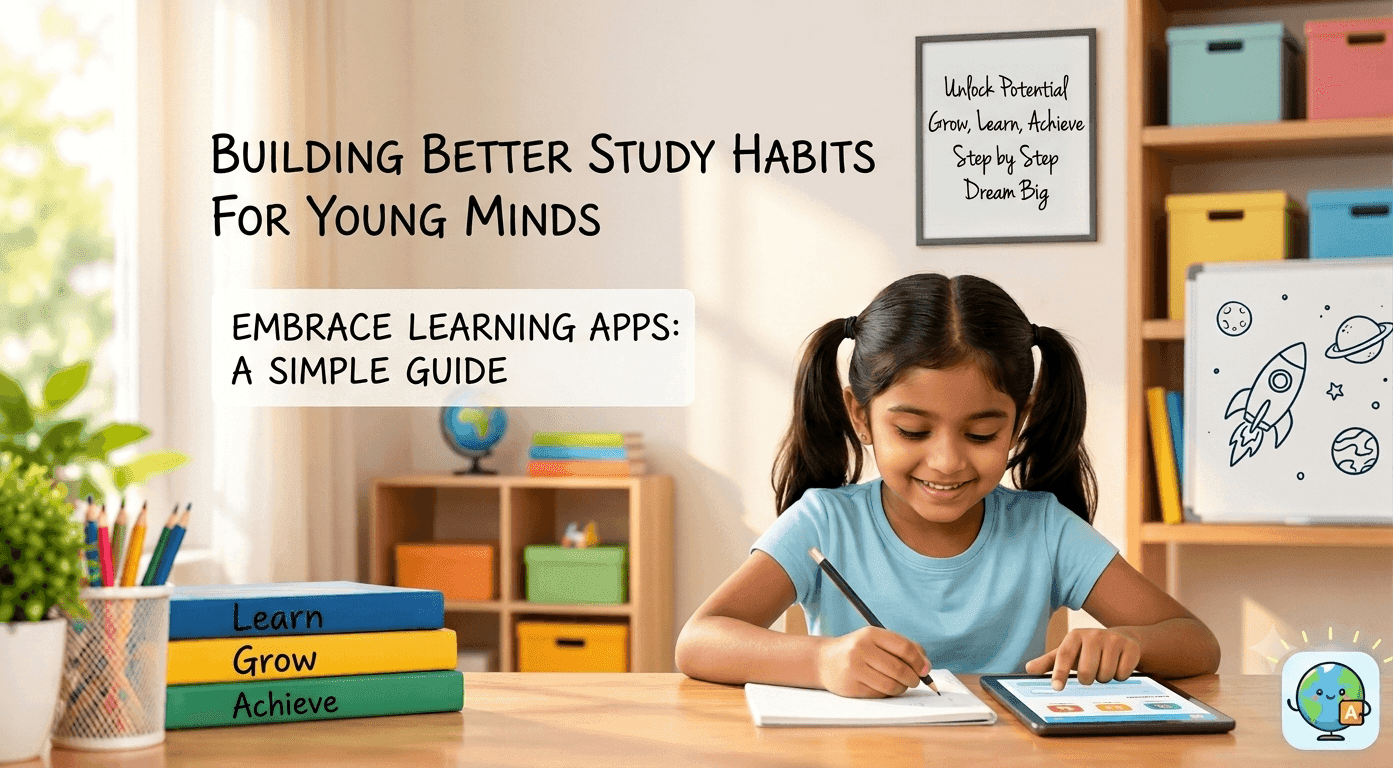
Empowering the Future: Using Technology to Build Better Study Habits in Young Minds
In the rapidly evolving landscape of 21st-century education, the traditional classroom model is no longer the sole arbiter of learning. The digital age has ushered in a wave of tools that can either distract or empower young students. The challenge for modern parents and educators is to harness this digital energy to build better study habits, turning potential distractions into powerful allies for academic success.This guide explores a simple, structured approach to integrating learning apps and technology into a child's daily routine, fostering essential soft skills—like organization, discipline, and persistence—that are vital for lifelong achievement. The New Paradigm: Beyond Passive Consumption For too long, screen time has been associated with passive consumption: watching endless videos or playing games. However, a seismic shift toward interactive and active digital engagement is underway. When a child uses a well-designed learning application, they are not just absorbing information; they are actively testing hypotheses, receiving real-time feedback, and constructing knowledge.This shifts the dynamic from simply completeing a worksheet to engaging in a dynamic, tailored learning path. This form of active engagement is fundamental to developing a deep and robust understanding of any subject, from mathematics to languages. The right digital tool provides the "scaffolding" required for a child to move past academic hurdles and reach the next level of comprehension. Step 1: Curate the Environment, both Digital and Physical A successful study habit begins with a conducive environment. In the physical realm, this means a clean desk, good lighting, and organized materials like books and colored pencils. In the digital realm, it requires careful curation of the apps installed on a device.Parental controls can and should be used to restrict distractions during dedicated study times, ensuring the child can focus solely on the task. A clean, uncluttered interface on a tablet can reduce cognitive load and improve focus. Consider creating a "study profile" on a shared device that only displays approved learning apps. Step 2: Set Clear, Achievable Milestones One of the most powerful features of modern learning apps is their goal-oriented structure. They often break down complex subjects into small, manageable modules. This is a crucial concept to teach young learners: the power of small steps.Instead of setting a vague goal like "study for an hour," a better approach is to set a goal such as "complete one lesson on fractions and master two skills in the writing app." This creates a structured routine. Completing these smaller milestones gives a child a tangible sense of achievement and builds the self-confidence needed to tackle larger challenges. Parents can reinforce this by reviewing the progress reports that many of these apps provide, celebrating the effort and growth rather than just the final result. Step 3: Integrate and Personalize Technology's true power lies in its ability to adapt to the individual learner. A well-designed app will personalize the learning experience. If a child is struggling with a concept, the app will offer more practice; if they are excelling, it will introduce advanced material. This keeps the learner appropriately challenged and prevents the boredom that can lead to bad habits. Parents and teachers can support this by encouraging children to explore different topics, guiding them towards apps that match their current learning goals. Conclusion The visual of a young girl with pigtails, split between a traditional pen-and-paper notebook and a digital tablet, perfectly encapsulates the modern study landscape. It is not an "either/or" scenario but a "both/and." By carefully curating digital tools and integrating them into a well-structured routine of active engagement, we can help our children build the resilient study habits they need. Our role as parents and educators is to guide them, unlocking their vast potential. Step by step, achievement by achievement, they will grow, learn, and discover that they are truly capable of achieving their big dreams. The journey toward excellence is not a sprint; it is a marathon built one small, smart habit at a time.
All blog posts
Make Learning Simple, Engaging & Effective
Learning becomes more meaningful when students can understand concepts clearly, practise regularly, and learn at their own pace. A well-designed learning platform can make everyday study more organized, interactive, and enjoyable. Instead of making learning feel like a routine task, digital learning tools can create an environment where students can explore new topics, strengthen their knowledge, and develop better study habits. A learning platform gives students access to educational content in a simple and convenient way. Lessons can be explored whenever and wherever students need them, allowing them to learn according to their own pace. Whether they are discovering a new concept, revising an important topic, or preparing for an upcoming examination, digital learning resources can support them throughout their learning journey. One of the most important parts of effective learning is understanding concepts clearly. Simply memorizing information may not always help students apply what they have learned. Engaging lessons, clear explanations, visual resources, and structured study materials can help students understand subjects more effectively and remember important ideas for longer.Regular practice also plays an important role in improving academic performance. Students can revisit topics, practise questions, test their understanding, and identify areas that need more attention. Consistent practice helps turn knowledge into confidence and encourages students to approach challenging subjects with a positive mindset. Another advantage of digital learning is the ability to stay focused and organized. Students can plan their study time, follow lessons systematically, and set achievable learning goals. Having a clear learning routine helps reduce confusion and makes it easier to maintain consistency.Progress is another important part of the learning experience. When students can see how much they have learned and how much they have improved, they can stay motivated to continue. Small achievements can encourage students to keep working towards bigger academic goals. A good learning environment should also encourage curiosity. Education is not only about completing lessons or preparing for examinations. It is about developing the habit of asking questions, exploring ideas, solving problems, and gaining knowledge that can be useful in everyday life. With the right digital learning support, students can make better use of their study time. They can learn new concepts, revise important topics, practise regularly, improve their skills, and gradually build confidence in their abilities. Key Learning Benefits Learn New Concepts – Explore lessons and discover new ideas through clear and engaging educational content. Build Strong Knowledge – Strengthen basic concepts and develop a deeper understanding of different subjects. Practice Regularly – Revise lessons, solve questions, and improve through consistent practice. Stay Focused – Follow a structured learning routine and work towards specific academic goals. Track Progress – Understand your improvement and stay motivated throughout your learning journey. Learn at Your Pace – Take time to understand difficult topics and revisit lessons whenever necessary. Conclusion Every student has the potential to learn, improve, and achieve meaningful goals. The right learning resources can make that journey easier, more engaging, and more organized. By combining clear lessons, regular practice, focused learning, and continuous improvement, students can develop stronger knowledge and greater confidence. Learning does not have to be complicated. With the right support and consistent effort, every study session can become an opportunity to discover something new and move one step closer to success.
Empowering the Future: Using Technology to Build Better Study Habits in Young Minds
In the rapidly evolving landscape of 21st-century education, the traditional classroom model is no longer the sole arbiter of learning. The digital age has ushered in a wave of tools that can either distract or empower young students. The challenge for modern parents and educators is to harness this digital energy to build better study habits, turning potential distractions into powerful allies for academic success.This guide explores a simple, structured approach to integrating learning apps and technology into a child's daily routine, fostering essential soft skills—like organization, discipline, and persistence—that are vital for lifelong achievement. The New Paradigm: Beyond Passive Consumption For too long, screen time has been associated with passive consumption: watching endless videos or playing games. However, a seismic shift toward interactive and active digital engagement is underway. When a child uses a well-designed learning application, they are not just absorbing information; they are actively testing hypotheses, receiving real-time feedback, and constructing knowledge.This shifts the dynamic from simply completeing a worksheet to engaging in a dynamic, tailored learning path. This form of active engagement is fundamental to developing a deep and robust understanding of any subject, from mathematics to languages. The right digital tool provides the "scaffolding" required for a child to move past academic hurdles and reach the next level of comprehension. Step 1: Curate the Environment, both Digital and Physical A successful study habit begins with a conducive environment. In the physical realm, this means a clean desk, good lighting, and organized materials like books and colored pencils. In the digital realm, it requires careful curation of the apps installed on a device.Parental controls can and should be used to restrict distractions during dedicated study times, ensuring the child can focus solely on the task. A clean, uncluttered interface on a tablet can reduce cognitive load and improve focus. Consider creating a "study profile" on a shared device that only displays approved learning apps. Step 2: Set Clear, Achievable Milestones One of the most powerful features of modern learning apps is their goal-oriented structure. They often break down complex subjects into small, manageable modules. This is a crucial concept to teach young learners: the power of small steps.Instead of setting a vague goal like "study for an hour," a better approach is to set a goal such as "complete one lesson on fractions and master two skills in the writing app." This creates a structured routine. Completing these smaller milestones gives a child a tangible sense of achievement and builds the self-confidence needed to tackle larger challenges. Parents can reinforce this by reviewing the progress reports that many of these apps provide, celebrating the effort and growth rather than just the final result. Step 3: Integrate and Personalize Technology's true power lies in its ability to adapt to the individual learner. A well-designed app will personalize the learning experience. If a child is struggling with a concept, the app will offer more practice; if they are excelling, it will introduce advanced material. This keeps the learner appropriately challenged and prevents the boredom that can lead to bad habits. Parents and teachers can support this by encouraging children to explore different topics, guiding them towards apps that match their current learning goals. Conclusion The visual of a young girl with pigtails, split between a traditional pen-and-paper notebook and a digital tablet, perfectly encapsulates the modern study landscape. It is not an "either/or" scenario but a "both/and." By carefully curating digital tools and integrating them into a well-structured routine of active engagement, we can help our children build the resilient study habits they need. Our role as parents and educators is to guide them, unlocking their vast potential. Step by step, achievement by achievement, they will grow, learn, and discover that they are truly capable of achieving their big dreams. The journey toward excellence is not a sprint; it is a marathon built one small, smart habit at a time.
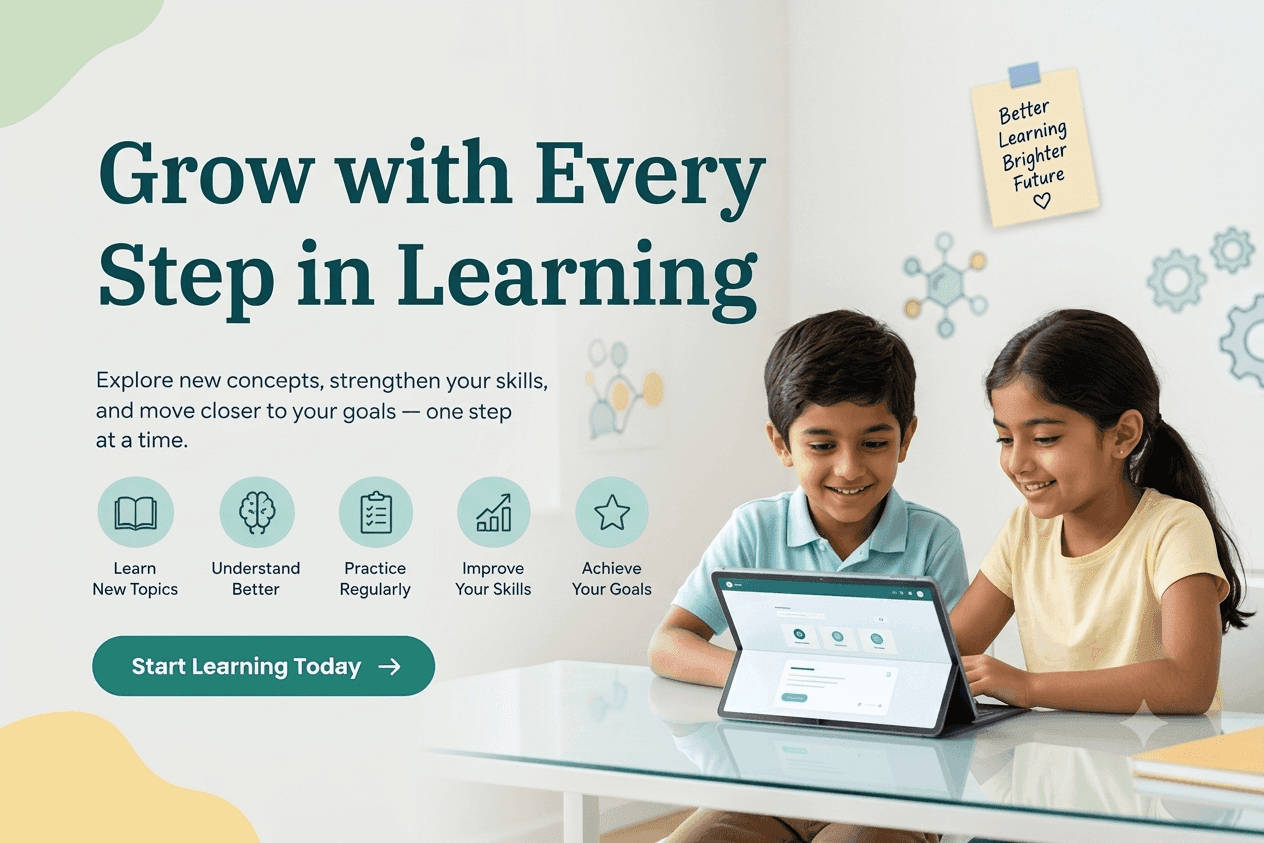
Building Bright Futures, One Lesson at a Time
In today's world, children's education is changing very rapidly, where incorporating digital media and technology beyond traditional books makes the learning experience significantly better. Education is not merely about exams and marks, as it sets the foundation for children's holistic growth and critical thinking. In educational promotional images and posters, top priority should be given to children's aspirations and learning interests, where bringing a dynamic atmosphere of shared learning into visuals helps foster joy and interest instead of focusing on just a single child. The key learning pillars focus on offering opportunities to learn new topics and foundational concepts, understanding subjects deeply to develop critical thinking skills rather than just memorizing lessons, providing regular practice to boost confidence, nurturing special talents according to technical interests and aptitudes, and paving a solid path to easily achieve educational goals. Modern education systems demand creative, interactive, and child-centered learning environments where learning is never a burden, but an experience that brings happiness and joy through interactive visuals, digital media, and practical exercises. Furthermore, learning with the help of digital devices fosters visual, auditory, and kinesthetic learning styles, which greatly develops children's thinking capacity and problem-solving abilities, while modern layouts with clean fonts, soft colors, and lively photos bring a positive vibe to students. Ultimately, the main objective of modern education is enabling children to apply what they have learned practically rather than just acquiring knowledge, which is why visual poster designs offering an encouraging environment provide a positive image for educational institutions and online learning platforms. By choosing suitable learning methods and utilizing interactive materials, these educational pathways help nurture children's talents and guide their steps toward a brighter future. Conclusion the main objective of modern education is to enable children to apply what they have learned practically rather than just acquiring knowledge. Visual poster designs that offer a dynamic and encouraging learning environment provide a positive image for educational institutions and online platforms. By choosing suitable learning methods and utilizing interactive materials, these educational pathways nurture children's talents and guide their steps toward a brighter future.
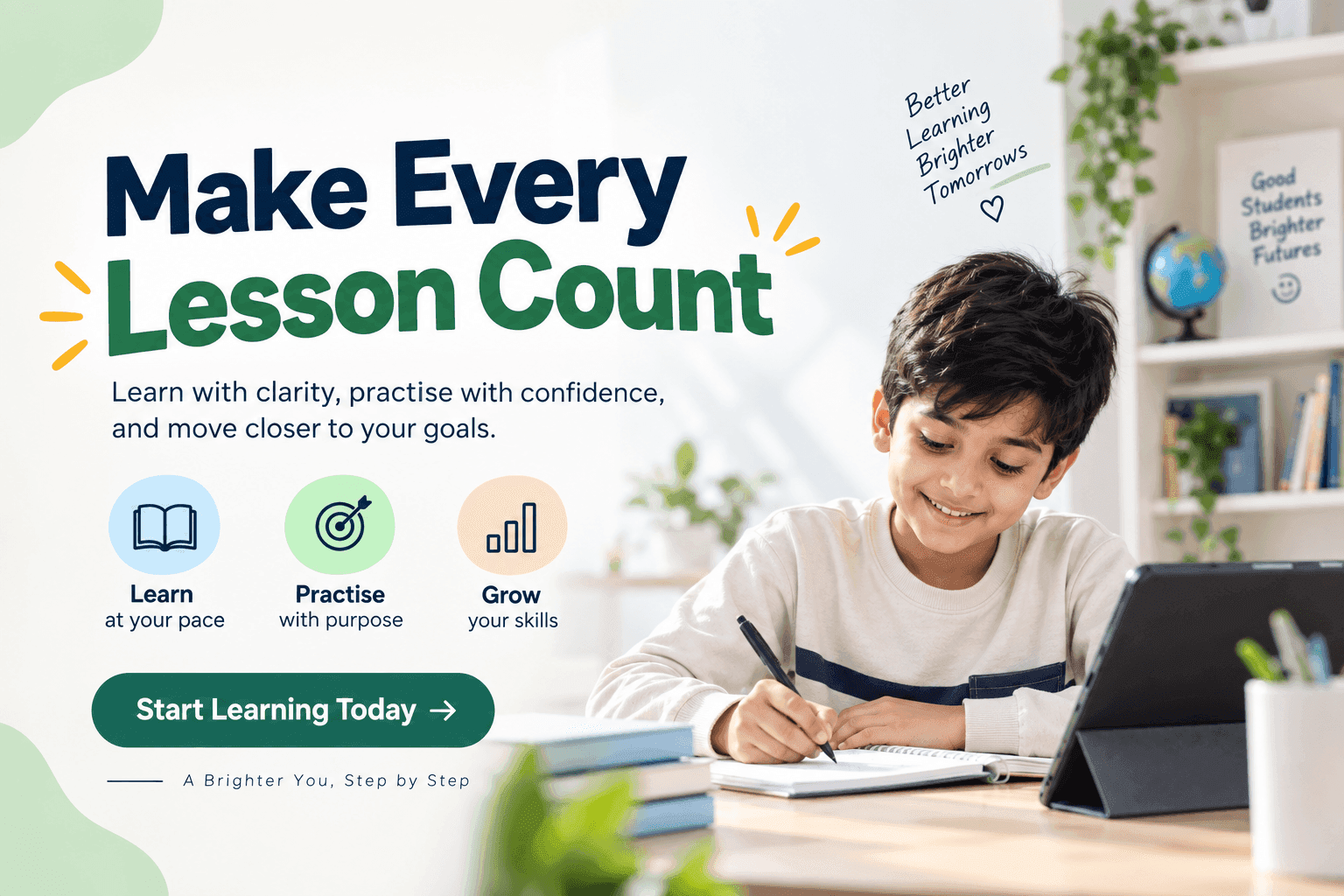
Make Every Lesson Count
Every student has the ability to learn, grow, and achieve meaningful goals. What makes the difference is having the right learning environment, clear guidance, regular practice, and the motivation to keep moving forward. A good learning experience should make education easier to understand, more engaging to explore, and more comfortable to follow at every stage. Learning becomes more effective when students can study at their own pace. Instead of rushing through topics, they can take time to understand important concepts, revisit areas that need more attention, and gradually build stronger knowledge. This creates a learning journey that focuses not only on completing lessons but also on developing real understanding. A modern digital learning experience can bring education closer to students wherever they are. With easy access to lessons and learning resources, students can continue their studies beyond the traditional classroom. Whether they are revising a familiar topic, exploring something new, or preparing for an upcoming assessment, digital learning can provide a flexible way to stay connected with education. Practice is another important part of successful learning. Understanding a concept is only the beginning. Students need opportunities to apply what they have learned, solve problems, answer questions, and identify areas where they can improve. Regular practice can gradually strengthen confidence and help students approach challenging topics with a more positive mindset.Learning should also be interesting. Interactive activities, simple explanations, visual content, and engaging educational experiences can make difficult subjects easier to approach. When students enjoy the process of learning, they may become more curious and willing to explore beyond what is required. Progress is built through consistency. A student does not need to master everything in one day. Small, regular learning sessions can create meaningful improvement over time. Each completed lesson, solved question, and newly understood concept becomes another step toward a larger goal. A strong learning platform can also help students stay organised. Instead of searching through different sources for every topic, they can have useful educational resources available in one structured environment. This can make study time more focused and help students develop better learning routines.Most importantly, education should help students develop skills that go beyond examinations. Critical thinking, problem-solving, creativity, communication, curiosity, and independent learning are valuable abilities that can support students throughout their academic and personal journeys. Parents and educators can support this process by encouraging children to ask questions, learn from mistakes, and remain consistent. Marks are important in education, but genuine understanding and confidence are also essential parts of long-term growth. Every learner is different. Some students may understand a topic quickly, while others may need more explanation or additional practice. A flexible learning environment can give each student the opportunity to progress according to their own pace and needs. Conclusion Great learning is not about how quickly you finish a lesson. It is about how well you understand it, how confidently you apply it, and how consistently you continue to improve. With the right resources, meaningful practice, and a supportive learning environment, every lesson can become an opportunity to discover something new and develop a valuable skill.
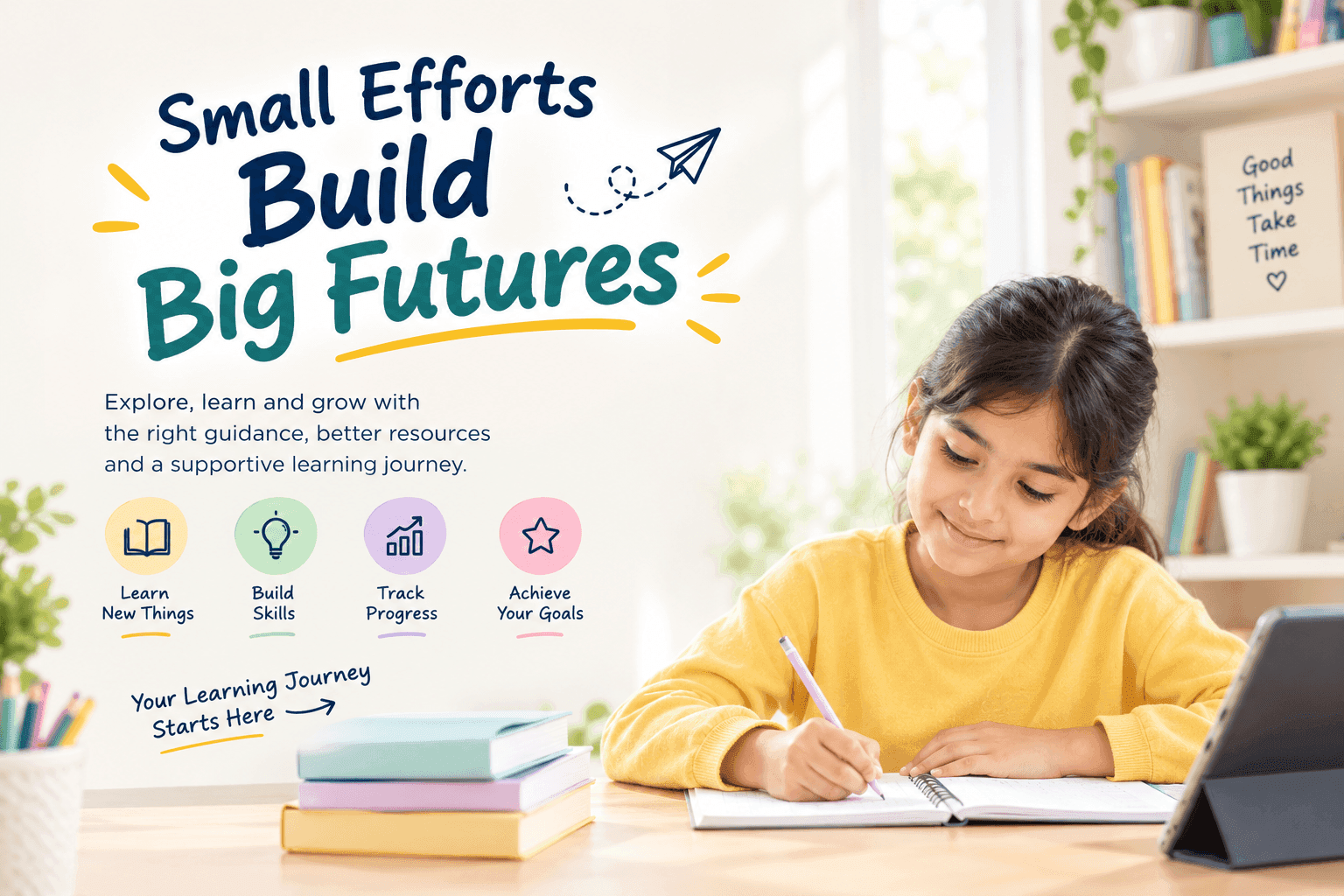
Learn Smarter, Grow Stronger
Learning is not just about completing lessons or preparing for exams. It is about developing curiosity, understanding new ideas, building confidence, and becoming ready for the future. With the right learning experience, students can make every study session more meaningful and productive. A modern learning platform can make education more flexible, engaging, and accessible. Students can learn at their own pace, revisit important topics, and spend more time understanding concepts instead of simply memorizing them. Whether they are studying Mathematics, Science, English, Social Studies, or developing new skills, a well-designed learning experience can support them throughout their journey. The goal is to make learning simple and enjoyable. Clear lessons, engaging activities, interactive learning experiences, and opportunities to practise can help students stay focused and motivated. Instead of feeling overwhelmed by large amounts of information, students can approach their studies step by step and gradually build a stronger understanding of each subject. A good learning experience also encourages students to become independent learners. They can explore topics that interest them, identify areas where they need more practice, and continue improving through regular learning. This helps develop valuable qualities such as curiosity, consistency, creativity, problem-solving, and confidence. Learning should also fit naturally into a student's daily routine. With digital learning, students can access educational resources whenever they have time and continue learning beyond the traditional classroom. This gives them greater flexibility while allowing them to create a study routine that works for them. Another important part of effective learning is motivation. Small achievements can encourage students to keep moving forward. Completing a lesson, understanding a difficult concept, solving a challenging question, or reaching a personal study goal can all become meaningful milestones. Over time, these small achievements can create a positive attitude toward education. Parents and educators can also play an important role by encouraging children to remain consistent and curious. Instead of focusing only on marks, learning should encourage children to understand concepts, ask questions, make mistakes, and learn from them. A supportive environment can help students develop confidence in their abilities. Technology can make this process even more engaging when it is used thoughtfully. Digital learning tools can bring together structured lessons, practice activities, educational resources, and personalised learning experiences in one convenient place. This can help students make better use of their study time while keeping the learning process organised. Most importantly, every student learns differently. Some may understand a concept quickly, while others may need additional explanation and practice. A flexible learning environment can give students the opportunity to learn at a comfortable pace without unnecessary pressure. Conclusion Education is a continuous journey, and every learning experience can become a step toward a better future. The aim is not simply to study more, but to learn better, understand deeper, and grow with confidence. When students are given the right resources, encouragement, and opportunities to practise, they can gradually turn their curiosity into knowledge and their knowledge into valuable skills.
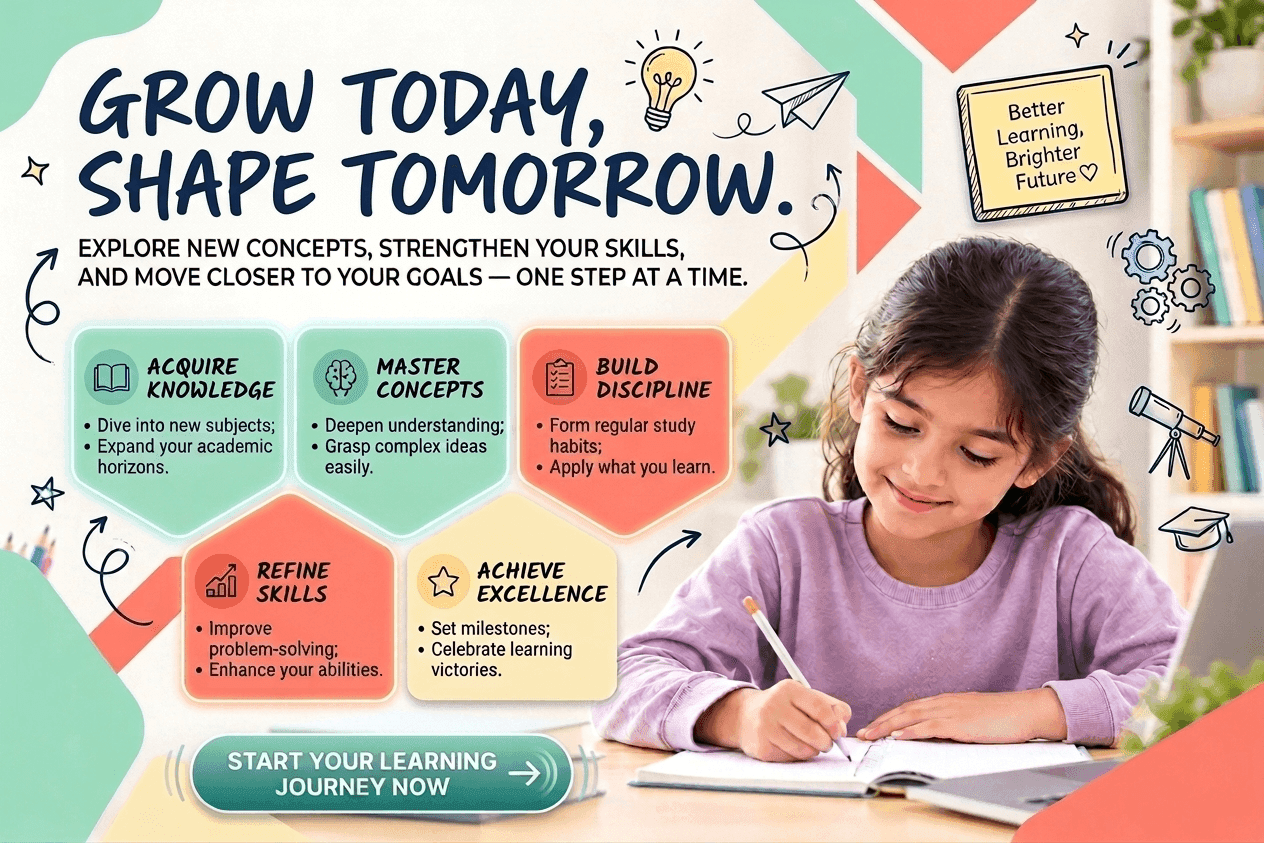
GROW TODAY, SHAPE TOMORROW: The Ultimate Roadmap for Modern Learning
In an era characterized by rapid technological advancement and dynamic shifts in every domain, learning is no longer confined to traditional classrooms or specific age groups. To thrive, individuals must embrace personal growth as a continuous process that strengthens mindsets and builds crucial real-world skills. By taking proactive steps today, you lay a solid foundation for a brighter, more fulfilling future. Here is a comprehensive guide to maximizing your learning journey through structured, actionable strategies. 1. Acquire Knowledge Explore Diverse Topics: Broaden your horizons by discovering new subjects outside your comfort zone. Curiosity drives innovation, and learning varied subjects helps you connect different concepts effectively.Active Reading and Inquiry: Move beyond passive reading. Take organized notes, ask critical questions, and seek real-world connections to deeply internalize new information. 2. Master Concepts Deepen Understanding: Avoid rote memorization. True mastery comes from understanding underlying mechanics, principles, and logic rather than simply learning facts for an exam.Simplify Complex Ideas: Practice explaining difficult concepts in simple terms. Teaching an idea to someone else is one of the most effective ways to test and consolidate your own knowledge. 3. Build Discipline Form Daily Study Habits: Consistency is far more powerful than sporadic cramming sessions. Set aside dedicated time each day to create a structured and predictable routine.Eliminate Distractions: Designate a quiet, organized workspace. Protecting your focus allows you to enter a state of deep work, leading to higher retention and productivity. 4. Refine Skills Targeted Problem-Solving: Put theoretical knowledge into practice by tackling real-world problems and practical exercises. Application transforms abstract concepts into tangible skills.Continuous Feedback Loop: Regularly evaluate your performance. Identifying weak points and seeking constructive feedback ensures continuous improvement and prevents stagnant progress. 5. Achieve Excellence Set Clear Milestones: Define specific, measurable, and achievable goals for your learning journey. Clear objectives provide direction and keep you motivated over long periods.Celebrate Small Victories: Acknowledge your accomplishments along the way. Celebrating milestones reinforces positive learning behaviors and maintains momentum. Conclusion Empowering your future begins with the choices you make today. By focusing on knowledge acquisition, deep conceptual mastery, unwavering discipline, and regular skill refinement, you transform learning from a temporary task into a lifelong superpower. Embrace every step of this journey—one step at a time—and shape the future you envision.