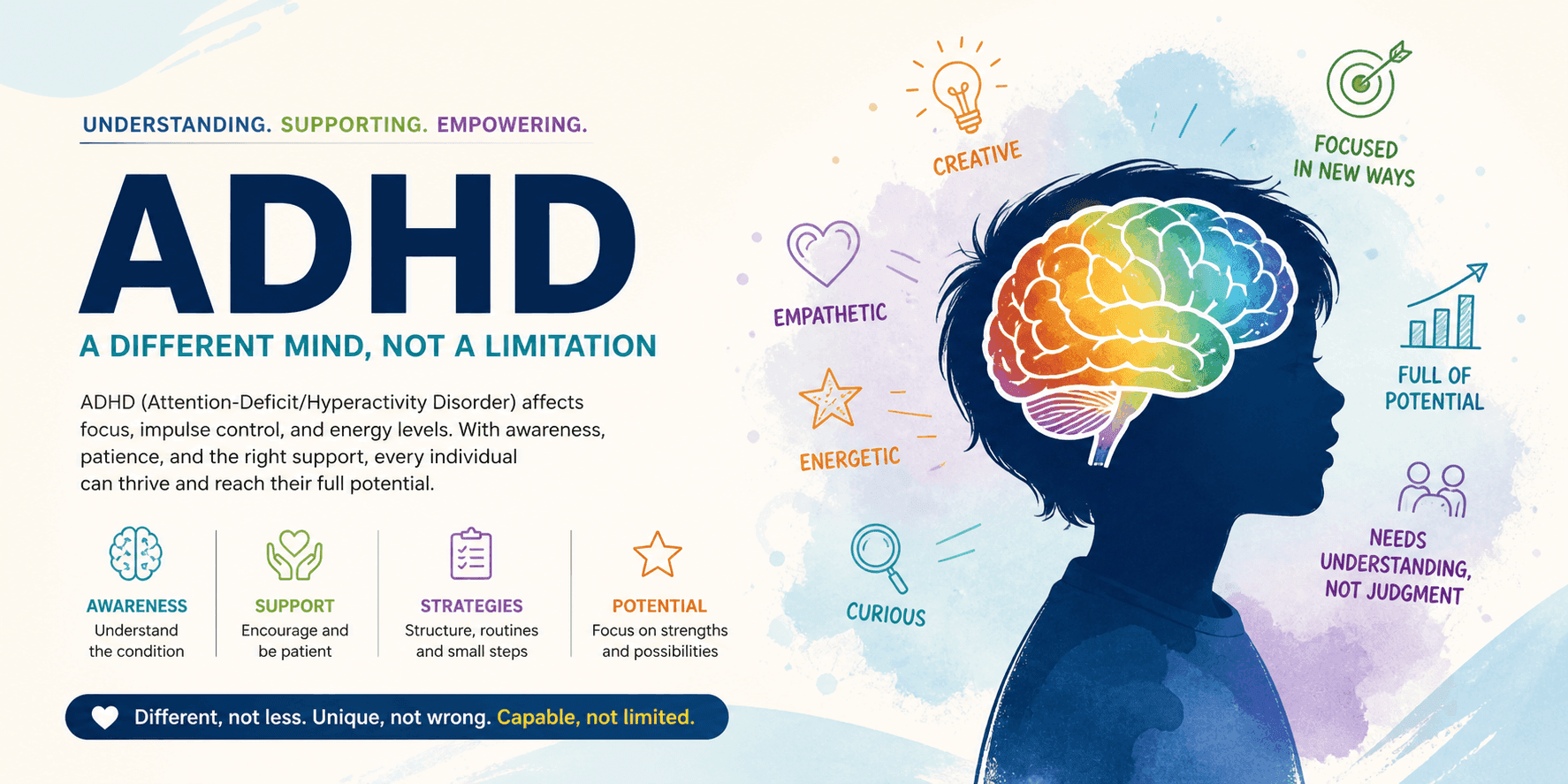
What is ADHD?
ADHD (Attention-Deficit/Hyperactivity Disorder) is a common neurodevelopmental condition that affects both children and adults. It impacts a person’s ability to focus, stay organized, control impulses, and manage energy levels. While it is often diagnosed in childhood, many individuals continue to experience symptoms into adulthood.
Common Symptoms of ADHD
ADHD symptoms usually fall into three main categories:
Difficulty focusing on tasks Easily distracted Frequently losing items Trouble following instructions
Constant movement or restlessness Difficulty staying seated Excessive talking
Acting without thinking Interrupting conversations Difficulty waiting for turns
Not everyone with ADHD shows all symptoms—each person’s experience is unique.
Causes of ADHD
The exact cause of ADHD is not fully understood, but research suggests a combination of factors:
Genetics: ADHD often runs in families Brain structure and function: Differences in brain development Environmental factors: Exposure to toxins, premature birth, or low birth weight ADHD in Children vs Adults
In Children:
Struggles in school Difficulty following routines Behavioral challenges
In Adults:
Trouble managing time Difficulty focusing at work Problems with organization and relationships
Many adults with ADHD were never diagnosed as children.
Diagnosis and Treatment
ADHD is diagnosed by healthcare professionals through behavioral assessments and history.
Treatment options include:
Behavioral therapy Medication (such as stimulants) Lifestyle changes (diet, exercise, sleep routines) Educational and workplace support
Early diagnosis and proper support can make a significant difference.
How to Support Someone with ADHD Be patient and understanding Create structured routines Break tasks into smaller steps Encourage positive reinforcement Avoid criticism and judgment Living with ADHD
ADHD is not a limitation—it’s a different way of thinking. Many individuals with ADHD are highly creative, energetic, and innovative. With the right support and strategies, they can succeed in academics, careers, and life.
Final Thoughts
ADHD is often misunderstood, but awareness and education can change that. Recognizing the signs early and providing the right support can help individuals thrive and reach their full potential.