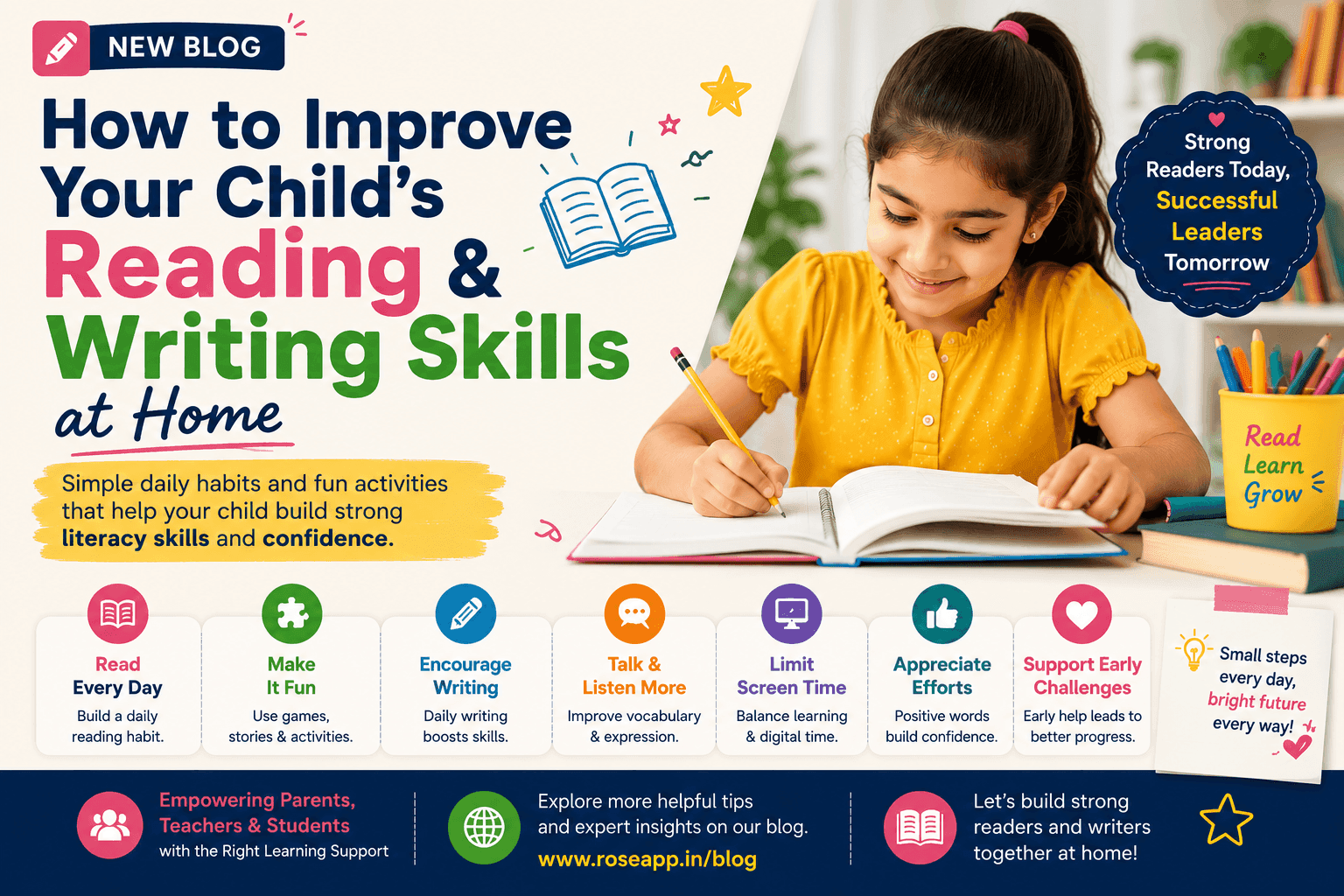
Reading and writing are two of the most important skills a child develops during early education. Strong literacy skills help children perform better in school, communicate confidently, and develop creativity and critical thinking. As parents, simple daily activities at home can make a big difference in improving these skills.
1. Create a Reading Habit
Encourage your child to read every day, even if it is only for 15–20 minutes. Choose storybooks, picture books, or short articles that match their age and interests. Reading regularly improves vocabulary, pronunciation, concentration, and imagination.
2. Make Learning Fun
Children learn faster when activities are enjoyable. Use flashcards, word games, alphabet puzzles, storytelling, and drawing activities to make reading and writing exciting instead of stressful.
3. Encourage Daily Writing
Ask your child to write small sentences, diary notes, shopping lists, or simple stories every day. Regular writing practice improves spelling, handwriting, sentence formation, and creativity.
4. Talk and Listen More
Communication plays a major role in language development. Spend time talking with your child, asking questions, and listening carefully to their answers. This helps improve vocabulary and confidence in expressing ideas.
5. Limit Screen Time
Too much screen time can reduce focus and learning interest. Balance digital entertainment with educational activities such as reading books, practicing handwriting, and interactive learning games.
6. Appreciate Small Improvements
Every child learns at their own pace. Appreciate their efforts and celebrate small achievements. Positive encouragement builds confidence and motivates children to continue learning.
7. Identify Learning Difficulties Early
If your child struggles consistently with reading, spelling, or writing, early support is important. Identifying learning difficulties at the right time can help children receive proper guidance and improve their academic journey.
Conclusion
Improving reading and writing skills does not require pressure or complicated methods. With patience, encouragement, and regular practice at home, parents can help children become confident readers and writers. Small daily efforts today can create a strong foundation for your child’s future success.