In the rapidly evolving landscape of 21st-century education, the traditional classroom model is no longer the sole arbiter of learning. The digital age has ushered in a wave of tools that can either distract or empower young students. The challenge for modern parents and educators is to harness this digital energy to build better study habits, turning potential distractions into powerful allies for academic success.This guide explores a simple, structured approach to integrating learning apps and technology into a child's daily routine, fostering essential soft skills—like organization, discipline, and persistence—that are vital for lifelong achievement.
The New Paradigm: Beyond Passive Consumption For too long, screen time has been associated with passive consumption: watching endless videos or playing games. However, a seismic shift toward interactive and active digital engagement is underway. When a child uses a well-designed learning application, they are not just absorbing information; they are actively testing hypotheses, receiving real-time feedback, and constructing knowledge.This shifts the dynamic from simply completeing a worksheet to engaging in a dynamic, tailored learning path. This form of active engagement is fundamental to developing a deep and robust understanding of any subject, from mathematics to languages. The right digital tool provides the "scaffolding" required for a child to move past academic hurdles and reach the next level of comprehension.
Step 1: Curate the Environment, both Digital and Physical A successful study habit begins with a conducive environment. In the physical realm, this means a clean desk, good lighting, and organized materials like books and colored pencils. In the digital realm, it requires careful curation of the apps installed on a device.Parental controls can and should be used to restrict distractions during dedicated study times, ensuring the child can focus solely on the task. A clean, uncluttered interface on a tablet can reduce cognitive load and improve focus. Consider creating a "study profile" on a shared device that only displays approved learning apps.
Step 2: Set Clear, Achievable Milestones One of the most powerful features of modern learning apps is their goal-oriented structure. They often break down complex subjects into small, manageable modules. This is a crucial concept to teach young learners: the power of small steps.Instead of setting a vague goal like "study for an hour," a better approach is to set a goal such as "complete one lesson on fractions and master two skills in the writing app." This creates a structured routine. Completing these smaller milestones gives a child a tangible sense of achievement and builds the self-confidence needed to tackle larger challenges. Parents can reinforce this by reviewing the progress reports that many of these apps provide, celebrating the effort and growth rather than just the final result.
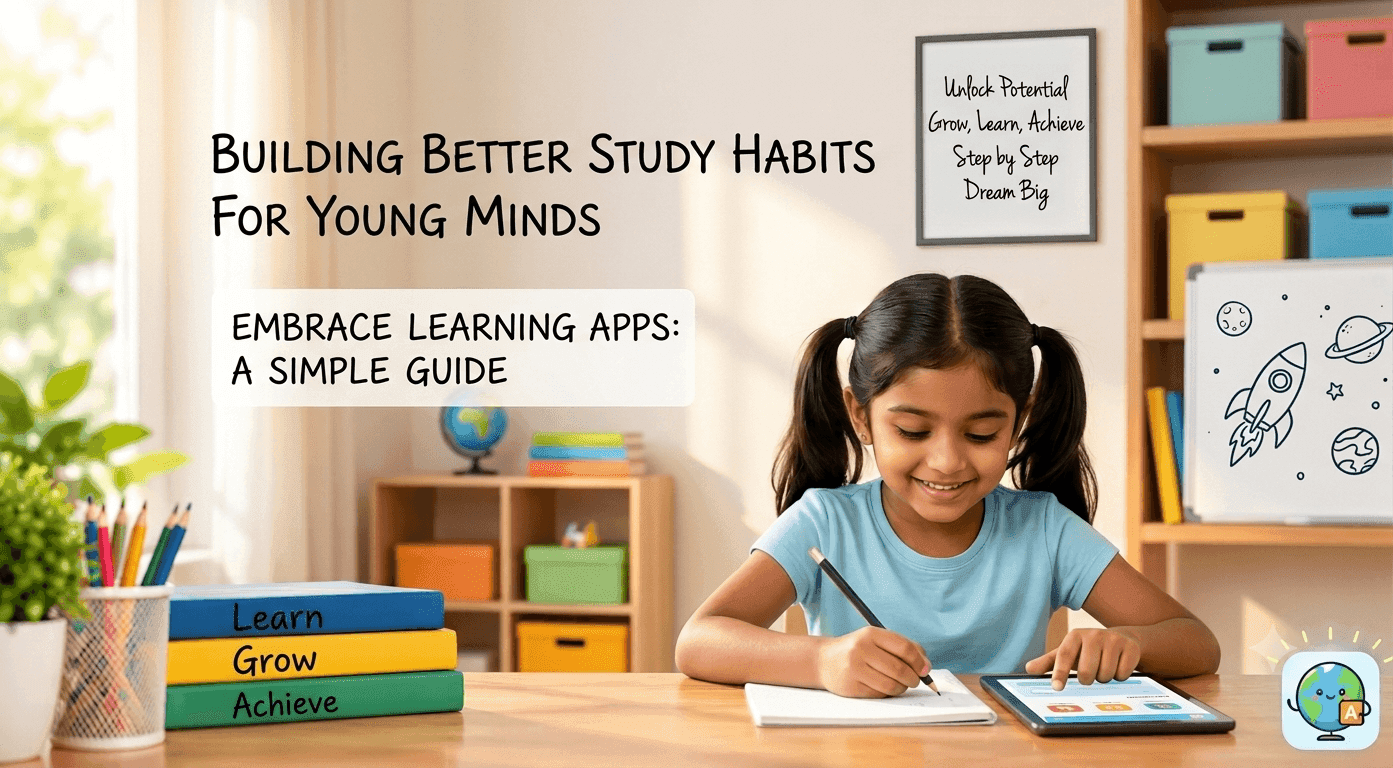
Step 3: Integrate and Personalize Technology's true power lies in its ability to adapt to the individual learner. A well-designed app will personalize the learning experience. If a child is struggling with a concept, the app will offer more practice; if they are excelling, it will introduce advanced material. This keeps the learner appropriately challenged and prevents the boredom that can lead to bad habits. Parents and teachers can support this by encouraging children to explore different topics, guiding them towards apps that match their current learning goals. Conclusion The visual of a young girl with pigtails, split between a traditional pen-and-paper notebook and a digital tablet, perfectly encapsulates the modern study landscape. It is not an "either/or" scenario but a "both/and." By carefully curating digital tools and integrating them into a well-structured routine of active engagement, we can help our children build the resilient study habits they need.
Our role as parents and educators is to guide them, unlocking their vast potential. Step by step, achievement by achievement, they will grow, learn, and discover that they are truly capable of achieving their big dreams. The journey toward excellence is not a sprint; it is a marathon built one small, smart habit at a time.