URL: /blog/signs-of-learning-difficulty-in-children
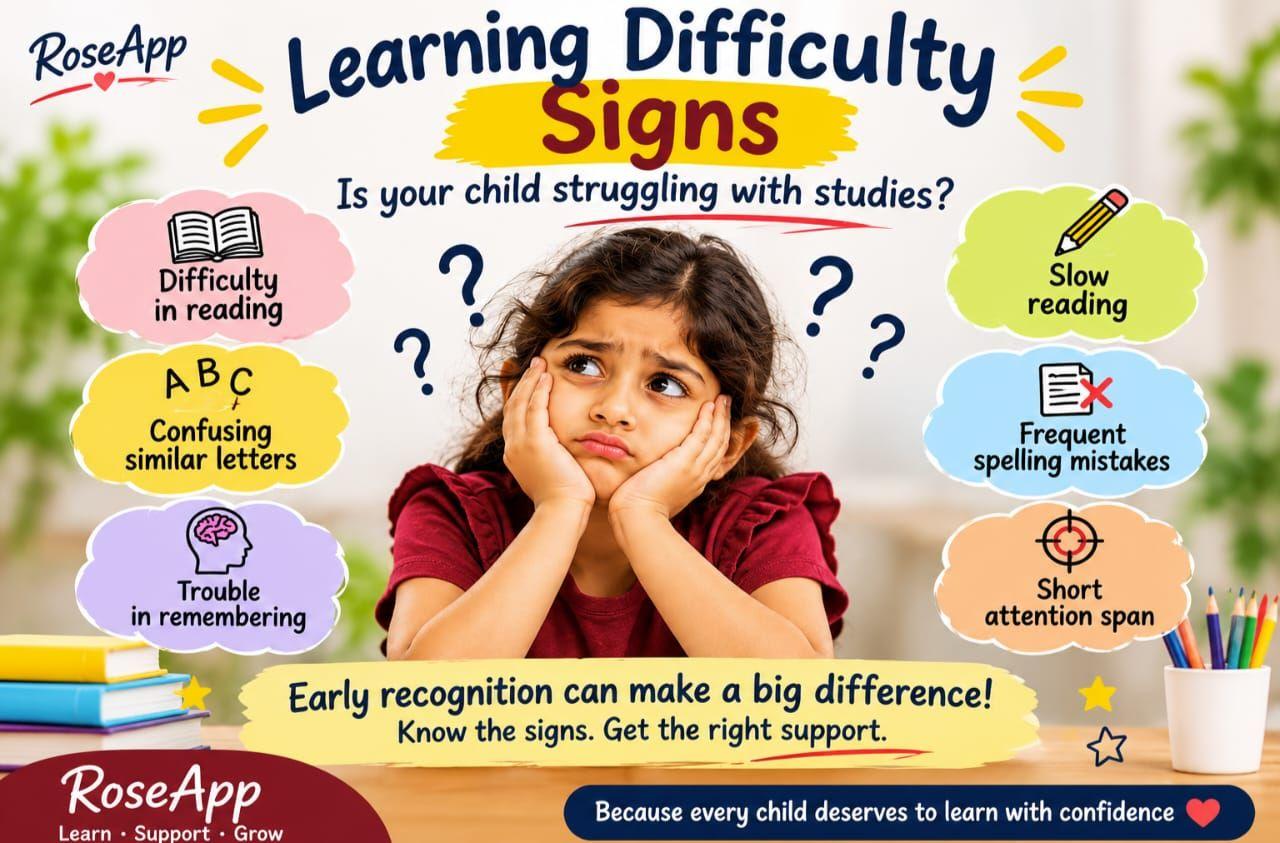
Signs of a learning difficulty can include ongoing trouble with reading, spelling, writing,memory or attention, even when a child is trying hard. One bad test does not mean thereis a problem. Children develop at different speeds, so look fordifficulties that keepreturning over time. This guide explains what to notice, what to do at home, and when to ask for a professional opinion. It cannot diagnose your child.
| Age group | What you may notice | |---|---| | Preschool | Trouble learning rhymes and songs, naming familiar objects, or putting things like the alphabet in order | | Primary school | Trouble sounding out words, mixing up similar letters or sounds, poor spelling, or not recognising common words | | Middle school | Very slow reading, spelling one word in different ways, or difficulty with writing | | High school | Skipping small words when reading aloud, searching for words while speaking, or missing jokes and figures of speech |
These examples are commonly linked with reading difficulties such as dyslexia, but other causes are possible. Hearing or vision problems, anxiety and attention difficulties can also affect learning. Y ou may also notice a child avoiding schoolwork, becoming afraid to try new things, or struggling to use what they learned in a new situation.
Watch for patterns. For a few days, note what your child finds difficult, when it happens,and what helps. Include examples of schoolwork if you can.
Ask whether they see the same problem in class and how your child compares with their usual progress.
Ask a doctor about checking your child's hearing and vision. A doctor can also guide you to the right specialist
A qualified professional can look more closely at language,reading, spelling and writing. Early help can stop a difficulty from becoming a bigger loss of confidence.
Help your child understand that a difficulty does not mean they are not intelligent or are not trying.
Ask for professional advice if the difficulty lasts for months, keeps affecting schoolwork, or your child starts to dread learning. Seek help sooner if you also notice big changes in mood, sleep, behaviour or daily life.
RoseApp offers online special education classes with one-to-one support. Our special educators can work on attention, concentration, memory and learning skills based on your child's needs. These classes do not replace a medical or psychological assessment. If you are worried about your child, message RoseApp to talk about the support available.
