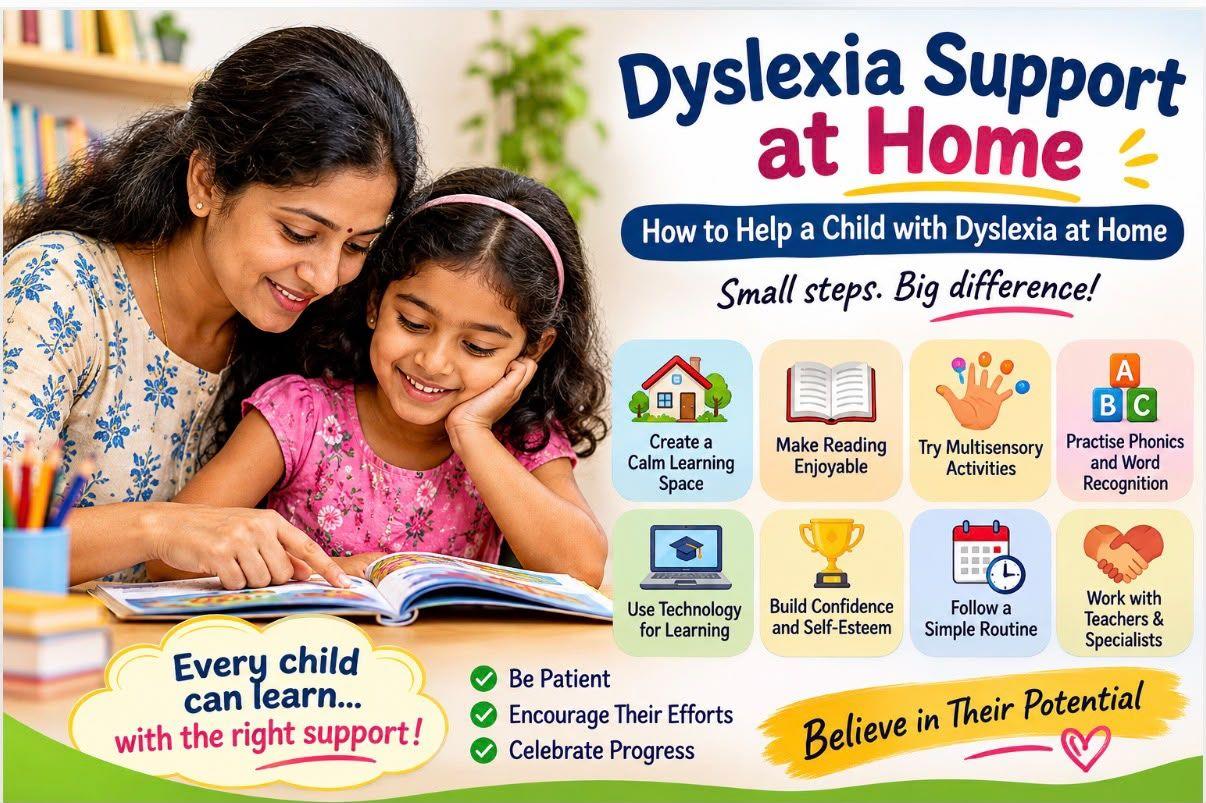
Every child learns differently. While some children learn to read and write quickly, others may need additional time, patience and support. Children with dyslexia often experience difficulties with reading, spelling, writing and recognising words. However, with the right guidance and encouragement, they can develop strong learning skills and achieve their potential.
Parents play an important role in supporting children with dyslexia. Creating a positive learning environment at home can improve their confidence, reduce learning stress and make everyday activities more enjoyable.
In this blog, we explore practical ways to provide effective dyslexia support at home and help children become confident learners.
Dyslexia is a specific learning difference that primarily affects reading, spelling and written language skills. Children with dyslexia may find it difficult to recognise words, connect letters with sounds, read fluently or spell familiar words.
It is important to understand that dyslexia is not related to intelligence. Children with dyslexia can be creative, intelligent and talented in many areas.
With appropriate teaching methods and consistent support, they can make meaningful progress in their learning journey.
Parents do not need to be professional teachers to support a child with dyslexia. Small, consistent activities at home can make learning more comfortable and enjoyable.
Here are eight practical strategies parents can follow.
A quiet and organised learning space can help children concentrate better.
Consider the following:
Avoid putting pressure on children to complete everything quickly.
Reading can be challenging for children with dyslexia. Instead of forcing them to read lengthy passages, introduce short and interesting reading activities.
Try these activities:
The main goal is to develop a positive relationship with reading.
Multisensory learning involves using different senses, such as seeing, hearing, touching and moving, to understand information.
This approach can make reading and spelling practice more engaging.
Some useful activities include:
Sand Writing: Ask your child to write letters and simple words in a tray of sand while saying the sounds aloud.
Letter Cards: Use colourful letter cards to build simple words.
Clay Activities: Encourage children to create letters using clay or playdough.
Sound Games: Practise identifying the beginning and ending sounds of familiar words.
These activities connect visual, auditory and tactile experiences during learning.
Phonics helps children understand the relationship between letters and sounds.
Parents can support phonics practice through simple daily activities.
For example:
Keep activities short and repeat them regularly.support, structured literacy instruction from a trained professional can be particularly beneficial.
Technology can make learning more accessible for children with dyslexia.
Parents can explore:
These tools can help children access information without feeling overwhelmed by reading and writing difficulties.
Emotional support is just as important as academic support.
Children with dyslexia may sometimes feel frustrated when they struggle with tasks that seem easy for their classmates.
Parents can help by:
Always remind your child that learning difficulties do not define their abilities or future.
A consistent routine helps children understand what to expect and makes learning more manageable.
A simple home learning routine could include:
Adjust the duration according to your child's age, attention span and learning needs.
Remember that quality and consistency are more important than long study sessions.
Home support works best when parents, teachers and specialists work together.
If your child experiences persistent difficulties with reading, spelling or writing, consider seeking an assessment from a qualified educational psychologist or an appropriate specialist.
You can also:
Professional guidance can help identify your child's strengths and areas that need additional support.
Learning does not always have to involve books and worksheets. Parents can introduce simple games that encourage children to practise important skills.
Here are some examples:
| Activity | Learning Benefit | |---|---| | Word matching games | Improves word recognition | | Picture storytelling | Develops vocabulary and language | | Alphabet puzzles | Supports letter recognition | | Rhyming games | Develops phonological awareness | | Sand writing | Encourages letter formation | | Story reading | Improves listening and comprehension | | Memory card games | Encourages memory and concentration |
Choose activities based on your child's interests and abilities.
While supporting children with dyslexia at home, parents should… For children who need additional reading parents should avoid certain practices that may increase learning stress.
Patience, encouragement and the right learning strategies can make a significant difference.
If a child consistently struggles with reading, spelling, recognising words or written communication despite regular support, parents should consider professional evaluation.
Early identification can help children access appropriate educational support and develop effective learning strategies.
A qualified professional can assess the child's individual learning needs and recommend suitable interventions.
Remember, identifying learning difficulties is not about labelling a child. It is about understanding how they learn best.
Supporting a child with dyslexia at home requires patience, understanding and consistency. Simple activities, enjoyable reading experiences, multisensory learning and emotional encouragement can help children develop confidence and essential learning skills.
Most importantly, remember that every child has unique strengths and abilities. With the right support from parents, teachers and specialists, children with dyslexia can overcome learning challenges and move towards a brighter future.
The best support begins with understanding, encouragement and believing in your child's potential.
