Every child is unique, and children with ADHD (Attention-Deficit/Hyperactivity Disorder) may experience the world a little differently. They may find it difficult to concentrate, control impulses, sit still, or complete everyday tasks. However, with the right support, understanding, and guidance, children with ADHD can learn, grow, and succeed.
Parents play an important role in helping children with ADHD build confidence, develop positive habits, and reach their full potential.
The first step is understanding what ADHD is and how it affects your child. ADHD is a neurodevelopmental condition that can affect attention, activity levels, and impulse control Instead of seeing certain behaviours as laziness or disobedience, try to understand the challenges your child may be experiencing. Patience and awareness can make a significant difference.
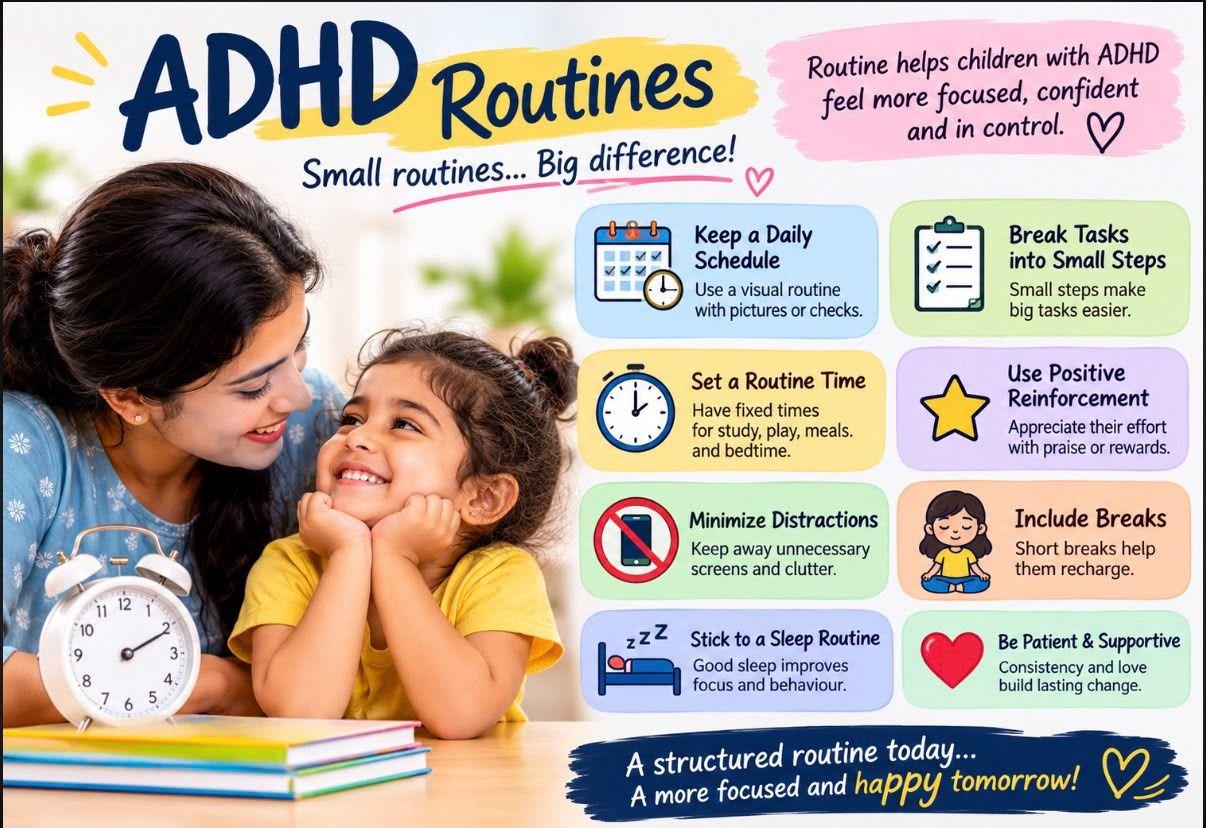
Children with ADHD often benefit from having a structured daily routine.
Try to maintain regular times for:
A simple timetable or colourful visual chart can help children understand what comes next and feel more organised.
Positive reinforcement can help children develop good habits and improve their confidence.
Praise your child when they complete a task, follow instructions, or make an effort. Small rewards, encouraging words, and appreciation can motivate them to repeat positive behaviours.
Remember to celebrate progress rather than expecting perfection.
Large or complicated tasks can feel overwhelming for children with ADHD.
Instead of giving several instructions at once, divide activities into smaller and easier steps.
For example, instead of saying, "Clean your entire room," try:
Simple instructions make tasks easier to understand and complete.
Children with ADHD may struggle to concentrate when there are too many distractions around them.
To support learning:
A comfortable and organised environment can improve focus and productivity.
Physical activity can be beneficial for children with ADHD. Activities such as cycling, swimming, dancing, outdoor games, and sports provide opportunities to stay active and develop social skills.
Encourage your child to participate in activities they enjoy.
Parents should maintain regular communication with their child's teachers to understand their academic and behavioural progress.
Working together with teachers, paediatricians, psychologists, and other qualified professionals can help create an appropriate support plan.
If your child needs additional support, seek professional guidance about available treatment and behavioural interventions.
Children with ADHD may sometimes feel frustrated, misunderstood, or discouraged.
Listen to their feelings, encourage open communication, and remind them that they are loved and valued.
Avoid comparing your child with other children. Every child develops at their own pace, and emotional support plays an important role in their overall well-being.
Supporting a child with ADHD is a journey that requires patience, understanding, consistency, and love.
As parents, you do not have to be perfect. What matters most is creating a supportive environment where your child feels safe, confident, and encouraged to grow.
With the right guidance and professional support, children with ADHD can overcome challenges, discover their strengths, and build a bright future.
Remember: Every child deserves understanding, encouragement, and the opportunity to shine.
