How to Choose an Online Tutor for Your Child: A Parent's Complete Guide
Choosing the right online tutor for your child is one of the most important decisions you can make to support their academic growth. With online education becoming increasingly popular, parents now have access to experienced tutors, personalized learning programs, and flexible study options from the comfort of home.
However, not every online tutor is the right fit for every child. The ideal tutor should understand your child's learning needs, encourage curiosity, build confidence, and make learning enjoyable.
In this guide, we will explore the important factors parents should consider when choosing an online tutor for their children.
- Understand Your Child's Learning Needs
Before searching for an online tutor, identify your child's specific learning requirements.
Ask yourself:
- Does your child need help with a particular subject?
- Are they struggling with mathematics, science, or English?
- Do they need additional academic support?
- Would they benefit from personalized attention?
- Are they preparing for school examinations?
Understanding these needs will help you find a tutor who can provide the right learning support.
- Check the Tutor's Qualifications and Experience
A good online tutor should have relevant subject knowledge, teaching experience, and the ability to explain concepts clearly.
Before selecting a tutor, check:
- Educational qualifications.
- Previous teaching experience.
- Subject specialization.
- Experience teaching children of similar age groups.
- Ability to handle different learning levels.
An experienced tutor understands that every child learns differently and adjusts teaching methods accordingly.
- Look for Personalized Learning
Every child has a unique learning style. Some children understand concepts quickly through visual explanations, while others need examples, repetition, and additional practice.
Choose an online tutor who:
- Creates lessons based on the child's ability.
- Identifies learning gaps.
- Provides individual attention.
- Offers regular practice and assessments.
- Tracks academic progress.
Personalized learning helps children develop a deeper understanding of subjects rather than simply memorizing information.
- Choose a Tutor Who Communicates Well
Communication plays an important role in successful online learning.
A good tutor should:
- Explain difficult topics in simple language.
- Encourage children to ask questions.
- Listen carefully to students.
- Create an interactive learning environment.
- Provide constructive feedback.
Children should feel comfortable communicating with their tutors without fear or hesitation.
- Consider the Online Teaching Methods
Online tutoring should be more than simply watching a teacher speak through a screen.
Look for tutors who use:
- Interactive whiteboards.
- Educational videos and presentations.
- Digital worksheets.
- Practice exercises and quizzes.
- Real-life examples and activities.
Interactive teaching methods can make lessons more engaging and help children understand challenging concepts.
- Check Reviews and Parent Feedback
Before choosing an online tutor, research their reputation.
Consider:
- Reviews from other parents.
- Student testimonials.
- Previous teaching results.
- Recommendations from trusted sources.
However, do not make your decision based only on ratings. A tutor's teaching approach and compatibility with your child are equally important.
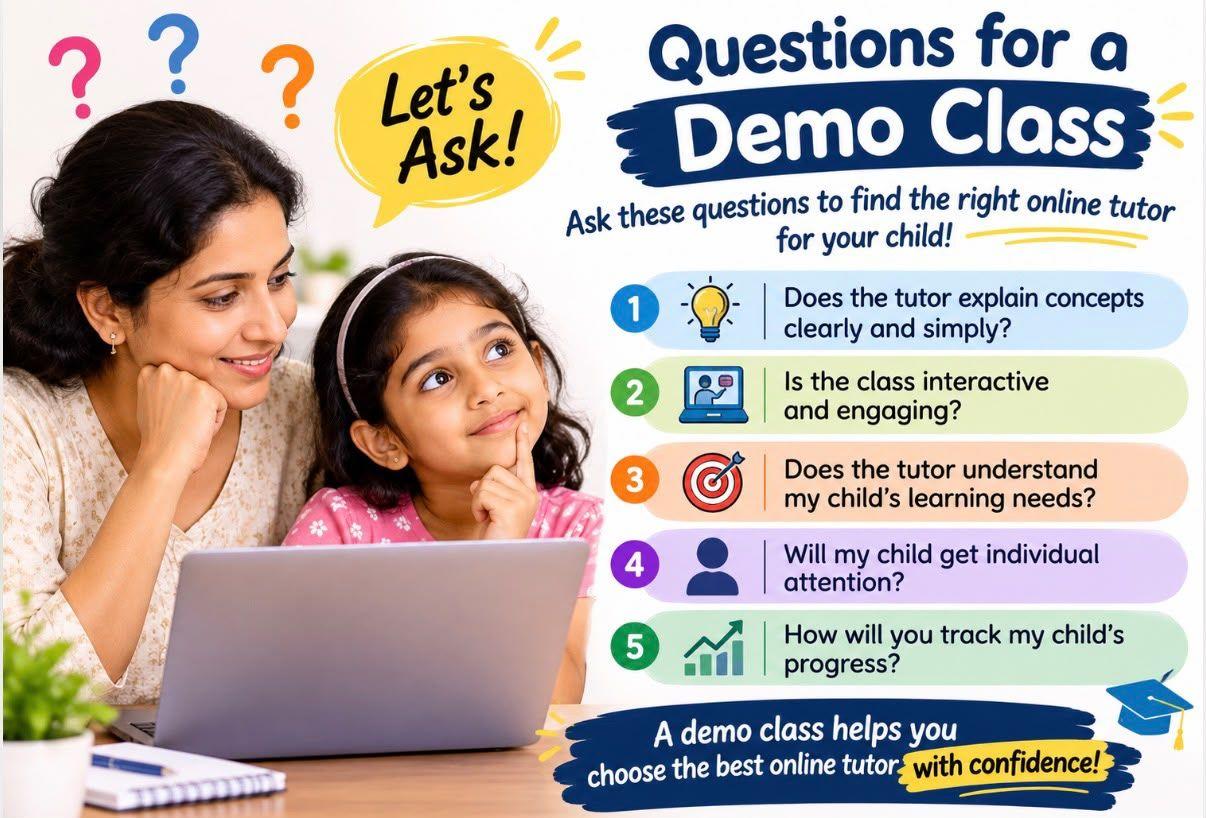
- Ask for a Trial Class
A trial class is one of the best ways to evaluate an online tutor.
During the trial session, observe:
- Does the tutor explain concepts clearly?
- Does your child feel comfortable?
- Is the class interactive?
- Does the tutor understand your child's learning difficulties?
- Does your child show interest in attending another class?
A good trial session can help you underhing for an online tutor, identify your child's specific learning requirements.
Ask yourself:
- Does your child need help with a particular subject?
- Are they struggling with mathematics, science, or English?
- Do they need additional academic support?
- Would they benefit from personalized attention?
- Are they preparing for school examinations?
Understanding these needs will help you find a tutor who can provide the right learning support.
- Check the Tutor's Qualifications and Experience
A good online tutor should have relevant subject knowledge, teaching experience, and the ability to explain concepts clearly.
Before selecting a tutor, check:
- Educational qualifications.
- Previous teaching experience.
- Subject specialization.
- Experience teaching children of similar age groups.
- Ability to handle different learning levels.
An experienced tutor understands that every child learns differently and adjusts teaching methods accordingly.
- Look for Personalized Learning
Every child has a unique learning style. Some children understand concepts quickly through visual explanations, while others need examples, repetition, and additional practice.
Choose an online tutor who:
- Creates lessons based on the child's ability.
- Identifies learning gaps.
- Provides individual attention.
- Offers regular practice and assessments.
- Tracks academic progress.
Personalized learning helps children develop a deeper understanding of subjects rather than simply memorizing information.
- Choose a Tutor Who Communicates Well
Communication plays an important role in successful online learning.
A good tutor should:
- Explain difficult topics in simple language.
- Encourage children to ask questions.
- Listen carefully to students.
- Create an interactive learning environment.
- Provide constructive feedback.
Children should feel comfortable communicating with their tutors without fear or hesitation.
- Consider the Online Teaching Methods
Online tutoring should be more than simply watching a teacher speak through a screen.
Look for tutors who use:
- Interactive whiteboards.
- Educational videos and presentations.
- Digital worksheets.
- Practice exercises and quizzes.
- Real-life examples and activities.
Interactive teaching methods can make lessons more engaging and help children understand challenging concepts.
- Check Reviews and Parent Feedback
Before choosing an online tutor, research their reputation.
Consider:
- Reviews from other parents.
- Student testimonials.
- Previous teaching results.
- Recommendations from trusted sources.
However, do not make your decision based only on ratings. A tutor's teaching approach and compatibility with your child are equally important.
- Ask for a Trial Class
A trial class is one of the best ways to evaluate an online tutor.
During the trial session, observe:
- Does the tutor explain concepts clearly?
- Does your child feel comfortable?
- Is the class interactive?
- Does the tutor understand your child's learning difficulties?
- Does your child show interest in attending another class?
A good trial session can help you understand whether the tutor is the right match for your child.
- Prioritize Your Child's Online Safety
Safety should always be a priority when selecting an online tutor.
Parents should check:
- Whether the tutor's identity and qualifications are verified.
- Whether the teaching platform is secure.
- Whether appropriate communication boundaries are maintained.
- Whether parents can monitor or access lesson information.
- Whether the tutoring provider has clear safeguarding procedures.
For younger children, parental supervision during online sessions is particularly important.
- Compare Pricing and Flexibility
Online tutoring services offer different pricing structures.
Before making a decision, compare:
- Cost per session.
- Monthly packages.
- Class duration.
- Cancellation policies.
- Availability of weekend classes.
- Additional learning resources.
Choose a tutoring arrangement that offers good educational value without creating unnecessary financial pressure.
- Monitor Your Child's Progress Regularly
Selecting a tutor is only the beginning. Parents should regularly evaluate whether the tutoring sessions are producing positive results.
Look for improvements in:
- Academic performance.
- Subject understanding.
- Problem-solving skills.
- Classroom participation.
- Learning confidence.
- Independent study habits.
Regular communication between parents and tutors helps ensure that children receive the support they need.
Why Choosing the Right Online Tutor Matters
The right online tutor can make a significant difference in a child's educational journey.
Beyond improving academic performance, a good tutor can help children become more confident, independent, and enthusiastic learners.
Remember, the best tutor is not necessarily the one with the highest qualifications or the most expensive classes. It is the one who understands your child and helps them achieve their learning goals.
Frequently Asked Questions (FAQs)
- What should parents look for when choosing an online tutor?
Parents should consider qualifications, teaching experience, subject knowledge, communication skills, personalized teaching methods, safety, and student feedback.
- Is online tutoring effective for school students?
Yes. Online tutoring can be effective when lessons are interactive, structured, and adapted to the student's learning requirements.
- What age is suitable for online tutoring?
Children can benefit from online tutoring at different ages. However, younger children may need additional parental supervision and shorter, engaging sessions.
- How many online tutoring sessions does a child need per week?
The ideal frequency depends on the child's academic needs, learning goals, and school schedule. One to three sessions per week may be suitable for many students, with adjustments based on progress.
- How can parents know if an online tutor is suitable?
Parents can evaluate a tutor through trial classes, student engagement, regular feedback, and improvements in the child's understanding and confidence.
Final Thoughts
Choosing an online tutor is an investment in [9:48 am, 11/11/2026] Kavitha: in your child's future. Take time to understand your child's learning needs, evaluate different tutors, and select someone who makes education meaningful and enjoyable.
With the right guidance, every child can develop the skills, knowledge, and confidence needed to succeed.